Categories
All Creation Sings! NEW Stewarding Divine Glory of your story
$40.00
Size
Please choose
In stock
Save this product for later
All Creation Sings! NEW Stewarding Divine Glory of your story
Product Details
All Creation Sings Anointing Oil
Five Trees of Oils Beautifully fragrant!
Pinon, Cedarwood, Fir, Frankincense, Cypress
Everywhere you go you’re a walking choir and your choir is all creation!
These oils are for sanctification and consecration for His divine purposes!
If you haven’t figure it out it seems Father has unofficially extended the day of atonement into a extended season of atonement, a important dispensation of grace to be purified deeply.
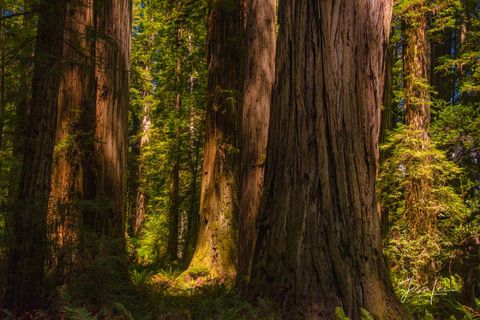
When God planted green trees in the desert,
They never died not because of HIS signature protection and that is prophetic mister/misses Oaks of Righteousness.
You are among the great trees!
And Jehovah Lumber jack is pruning.
He chastises those He loves.
My testimony is liken to a personal chainsaw massacre. LOL Oh good Lordie.
The shape of a tree on top is known as the crown of that tree.
When He is pruning how many know its going to affect your crown in some way.
He is cutting down our branches of ego and pride, self-reliance, prayerlessness and all ungodly nest of past mistakes that have been festering, eating away our identity.
The woodpecker of negativity has done a lot of damage too.
Ready to get an impartation of courage?
Of course you do!
Below is the biblical symbolism of each tree oil blended in this anointing oil.
It’s really fascinating and enlightening.
Pinon (pine tree) oil in the bible symbolizes DIVINE GLORY, restoration, and the Lord’s power, specifically representing the beautification of the sanctuary and the transformation of the wilderness into a fruitful land.
It represents God’s hand in creation, bringing beauty to barren places (Isaiah 41:19, 60:13).
Divine and Glory and Adornment:
In Isaiah 60:13 the pine tree (often grouped with Cedar and cypress) represents the glory of Lebanon, brought to adorn the place of God’s sanctuary.
Restoration of the wilderness:
Isiaah 41:19 mentions God placing pine trees in the desert, symbolizes bringing life, beauty, and fertility to barren. desolate, or “wasteland” areas.
Strength and Endurance:
As a tree that remains green in arid (land or a climate – having little or no rain; too dry or barren to support vegetation) conditions, it symbolizes God’s everlasting nature and protective presence.
.Anointing and Consecration:
Like other sacred oils, it is associated with setting something apart for Holy use.
Contextual Mentions:
Isaiah 41:19-20 . . . I will set pines in the wasteland, the fir and the cypress together, so that people may see and know . . . that the Holy One of Israel has created it.
Isaiah 60:13 The glory of Lebanon (this glory in biblical context refers to the majestic cedars and other fine trees of Lebanon, renowned for their strength, beauty, and fragrance. This phrase symbolizes majesty, stability, and divine provision, often used to represent the finest natural resources offered to God) will come to you, the pine, the fir and the cypress together, to adorn the place of my sanctuary . .
The cedar tree, particularly the cedar of Lebanon, holds rich symbolic meaning throughout the Bible, representing strength, majesty, divine blessing, and enduring faithfulness.
Strength and Endurance: The cedar is frequently used to symbolize strength and stability. In Psalm 92:12, the righteous are compared to cedars: "The righteous will flourish like a palm tree, and grow like a cedar in Lebanon." This imagery conveys spiritual vitality, deep roots, and lasting resilience.
Divine Favor and Sacred Use: The cedar’s durability and beauty made it ideal for sacred construction. King Solomon used cedar extensively in building the Temple in Jerusalem (1 Kings 6:9-10) and his palace, signifying God’s presence and the permanence of His covenant. Its use in holy spaces underscores its association with holiness and divine provision.
Pride and Downfall: While often a symbol of greatness, the cedar also warns against pride. In Ezekiel 31, Assyria is likened to a mighty cedar of Lebanon—lofty and magnificent—but its pride leads to destruction, illustrating that human exaltation without humility is destined to fall.
Protection and Restoration: The cedar symbolizes God’s shelter and care. In Ezekiel 17:23, God promises to plant a cedar that will provide shade and refuge for all birds, symbolizing His protection and restoration for His people.
Fir Tree in the Bible symbolizes strength, endurance, divine beauty, and eternal life, primarily due to its evergreen nature and majestic stature. It is frequently associated with God’s restoration and provision, as seen in Isaiah 41:19 and Isaiah 55:13, where the planting of fir trees in desolate places signifies renewal and transformation.
The tree's presence in prophetic literature underscores its role as a symbol of hope, prosperity, and divine blessing.
- Resilience and Eternal Life: The evergreen quality of the fir tree represents eternal life and God’s unchanging nature, often linked to spiritual vitality and steadfast faith (Hosea 14:8; John 3:16).
- Divine Beauty and Glory: In Isaiah 60:13, the fir tree is part of the "glory of Lebanon" brought to adorn God’s sanctuary, highlighting its majesty and sacred significance.
- Construction and Worship: Fir wood was used in sacred architecture (Solomon’s Temple, 1 Kings 6:15) and musical instruments (2 Samuel 6:5), indicating its practical value and spiritual importance.
- Symbol of Identity and Renewal: In Isaiah 55:13, the replacement of thorns with fir trees symbolizes a noble transformation—from a life marked by curses to one of dignity and divine purpose.
The term "fir" in the Bible often refers to cypress or pine species (e.g., Cupressus sempervirens, Pinus halepensis) rather than modern firs, reflecting regional tree types in ancient Lebanon. Its use across texts emphasizes God’s power to renew, beautify, and sustain His people.
The cypress tree in the Bible symbolizes strength, eternal life, divine protection, and restoration. Its durable, aromatic wood was used in sacred constructions, including King Solomon’s Temple (1 Kings 5:8–10), signifying its high value and sacredness. In prophetic passages, the cypress represents God’s promise of renewal and transformation—in Isaiah 41:19, God declares He will plant cypress trees in the desert, symbolizing His provision and the restoration of barren lands.
In Isaiah 55:13, the cypress replaces the thornbush, illustrating divine favor and the replacement of sin and suffering with righteousness and life. The tree’s evergreen nature reinforces its association with immortality and eternal life, while its towering presence in Ezekiel 31:8 highlights majesty and resilience. Though later Western traditions linked it to mourning, in biblical context, the cypress stands as a powerful emblem of God’s enduring covenant, spiritual steadfastness, and the hope of resurrection.
Isaiah 55
1 "Hey there! All who are thirsty, come to the water! Are you penniless? Come anyway - buy and eat! Come, buy your drinks, buy wine and milk. Buy without money - everything's free!
2 Why do you spend your money on junk food, your hard-earned cash on cotton candy? Listen to me, listen well: Eat only the best, fill yourself with only the finest.
3 Pay attention, come close now, listen carefully to my life-giving, life-nourishing words. I'm making a lasting covenant commitment with you, the same that I made with David: sure, solid, enduring love.
4 I set him up as a witness to the nations, made him a prince and leader of the nations,
5 And now I'm doing it to you: You'll summon nations you've never heard of, and nations who've never heard of you will come running to you Because of me, your God, because The Holy of Israel has honored you."
6 Seek God while he's here to be found, pray to him while he's close at hand.
7 Let the wicked abandon their way of life and the evil their way of thinking. Let them come back to God, who is merciful, come back to our God, who is lavish with forgiveness.
8 "I don't think the way you think. The way you work isn't the way I work." God's Decree.
9 "For as the sky soars high above earth, so the way I work surpasses the way you work, and the way I think is beyond the way you think.
10 Just as rain and snow descend from the skies and don't go back until they've watered the earth, Doing their work of making things grow and blossom, producing seed for farmers and food for the hungry,
11 So will the words that come out of my mouth not come back empty-handed. They'll do the work I sent them to do, they'll complete the assignment I gave them.
12 "So you'll go out in joy, you'll be led into a whole and complete life. The mountains and hills will lead the parade, bursting with song. All the trees of the forest will join the procession, exuberant with applause.
13 No more thistles, but giant sequoias, no more thornbushes, but stately pines - Monuments to me, to God, living and lasting evidence of God."
Frankincense in the Bible is a fragrant resin obtained from trees of the genus Boswellia, particularly Boswellia sacra and Boswellia serrata. Its symbolism is deeply rooted in worship, purity, and divine presence.
- Worship and Divine Presence: Frankincense was a central component of the sacred incense used in the Tabernacle and Temple. As described in Exodus 30:34–36, it was mixed with other spices and burned on the altar of incense, symbolizing the prayers of the Israelites ascending to God.
- The sweet aroma represented the pleasing nature of sincere devotion.
- Purity and Holiness: Its use in grain offerings (Leviticus 2:1–2) signified the need for holiness in gifts presented to God. The inclusion of frankincense in offerings emphasized sanctification and consecration for divine purposes.
- Symbol of Christ’s Priesthood: In Matthew 2:11, the Magi presented frankincense to the infant Jesus. This gift symbolized His divine nature and future role as the ultimate High Priest, mediating between God and humanity.
- Intercession and Prayer: In Revelation 8:3–4, an angel offers incense with the prayers of the saints, illustrating frankincense as a symbol of purified prayers ascending to God.
- Anointing and Divine Appointment: Anointing with frankincense signified being set apart by God, as seen in the consecration of priests, kings, and sacred spaces—linking it to the Holy Spirit’s presence and divine calling.
The Frankincense Tree itself, therefore, is not just a source of valuable resin but a symbol of spiritual connection, divine holiness, and the sacred bridge between heaven and earth.
The coconut tree (Coconut organic Carrier oil used for this batch of anointing oil)
holds deep symbolic meaning in biblical and spiritual contexts, even though it is not explicitly mentioned in scripture.
It is often seen as a representation of abundance, provision, and resilience, reflecting God’s sustaining power.
Its hard outer shell symbolizes protection and strength, while the nourishing water and flesh represent spiritual refreshment and sustenance.
The tree’s ability to thrive in harsh coastal environments mirrors the biblical call to remain steadfast in faith, as seen in Jeremiah 17:7–8, where the righteous are likened to a tree planted by water, unshaken by drought.
Jeremiah 17:7-8 TPT reads
“I will bless with happiness the one who trusts in me, the one who trusts in me alone.
He is like a tree planted on the riverbank, extending its roots into streams of water.
It does not fear when scorching heat comes, for its leaves remain fresh and never fading even in a year of drought.
It has no anxieties but continues to bear luscious fruit.”
The straight, upright growth of the coconut tree is interpreted as a symbol of uprightness and righteousness, aligning with the idea of living a life aligned with divine principles.
Additionally, the tree’s prolific fruit-bearing nature reflects the fruit of the Spirit (Galatians 5:22–23), encouraging believers to cultivate virtues like love, joy, and peace.
In some interpretations, the coconut’s three eyes are seen as a symbol of the Trinity—Father, Son, and Holy Spirit—working in harmony.
In dream interpretation, a coconut tree signifies good health, longevity, and fruitfulness, while breaking a coconut symbolizes the humbling of the ego and surrender to divine will, a theme echoed in rituals across cultures, including Hindu and African spiritual practices.
Overall, the coconut tree serves as a powerful metaphor for faith, endurance, and divine provision in both physical and spiritual life.
Psalm 148
All Creation Exhorted to Praise the LORD
1 Hallelujah! Praise God from heaven, praise him from the mountaintops;
2 Praise him, all you his angels, praise him, all you his warriors,
3 Praise him, sun and moon, praise him, you morning stars;
4 Praise him, high heaven, praise him, heavenly rain clouds;
5 Praise, oh let them praise the name of God - he spoke the word, and there they were!
6 He set them in place from all time to eternity; He gave his orders, and that's it!
7 Praise God from earth, you sea dragons, you fathomless ocean deeps;
8 Fire and hail, snow and ice, hurricanes obeying his orders;
9 Mountains and all hills, apple orchards and cedar forests;
10 Wild beasts and herds of cattle, snakes, and birds in flight;
11 Earth's kings and all races, leaders and important people,
12 Robust men and women in their prime, and yes, graybeards and little children.
13 Let them praise the name of God - it's the only Name worth praising. His radiance exceeds anything in earth and sky;
14 he's built a monument - his very own people! Praise from all who love God! Israel's children, intimate friends of God. Hallelujah!
More to this write-up coming soon
